
HOME / TREATMENTS / LASERS / RUBY LASERS
Ruby Lasers
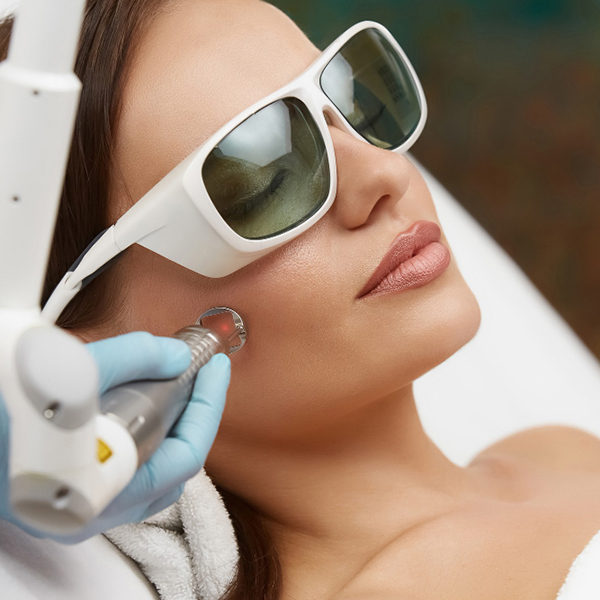
Targeting Pigmentation with Melanin-Specific Laser Energy
Ruby laser treatments are used in dermatology and aesthetic medicine to address certain types of pigmentation within the skin.
The ruby laser emits a wavelength (694nm) that is strongly absorbed by melanin, the pigment responsible for skin colour. Because of this strong melanin absorption, ruby lasers can target pigment deposits within the skin with high specificity.
At CLEO Aesthetic, ruby laser treatments may be used to address selected pigmentation concerns, particularly when pigment is located deeper within the skin layers or when careful pigment targeting is required.
Treatment Snapshot
- Treatment Type
Pigment-targeting laser
- Downtime
Mild to moderate depending on treatment
- Primary Focus
Pigmentation and dermal pigment
- Treatment Time
Approximately 20–30 minutes
- Common Areas
Face
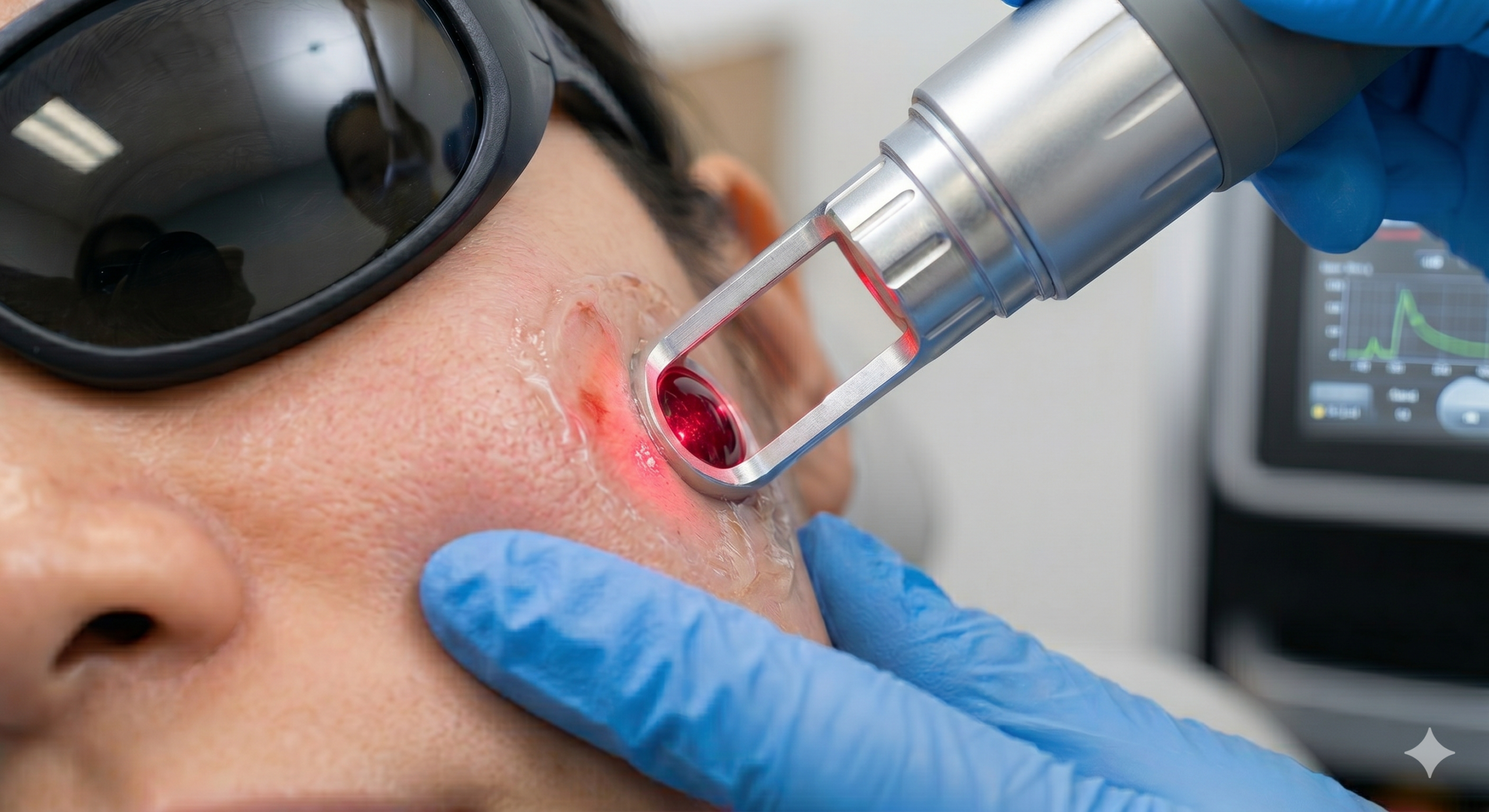
How Ruby Laser Treatments Work
Ruby lasers emit light at a wavelength of 694 nm, which is strongly absorbed by melanin within the skin.
When the laser energy is delivered to pigmented areas, melanin absorbs the energy and breaks into smaller pigment fragments. These fragments are gradually cleared by the body’s natural processes.
Because the ruby laser has a strong affinity for melanin, it may be useful for targeting pigment located within the skin while minimising interaction with surrounding tissue structures.
This process may help:
- break down pigment deposits
- improve uneven pigmentation
- support clearer skin tone
Results typically develop gradually as pigment particles are removed from the skin over time.
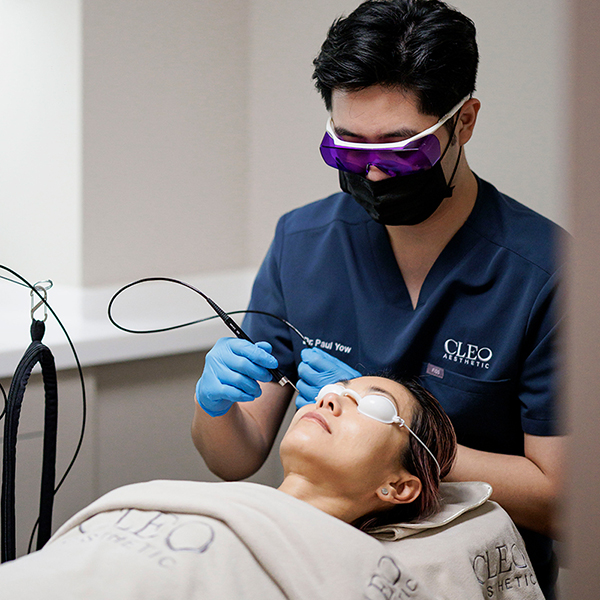
Ruby Laser vs Pico Laser for Pigmentation
Different laser technologies may be used to treat pigmentation depending on the depth and type of pigment present.
Pico lasers use ultra-short pulses that create a photoacoustic effect to fragment pigment particles. These treatments are commonly used for a wide range of pigmentation concerns and skin tone refinement.
Ruby lasers, by contrast, rely on strong melanin absorption at the 694 nm wavelength. This allows the laser energy to interact directly with pigment particles within the skin.
In certain situations, ruby lasers may be selected when deeper pigmentation is present or when precise melanin targeting is required.
The most appropriate laser treatment depends on factors such as:
- pigmentation type
- pigmentation depth
- skin type
- overall treatment goals
A medical consultation helps determine which laser technology may be most appropriate.
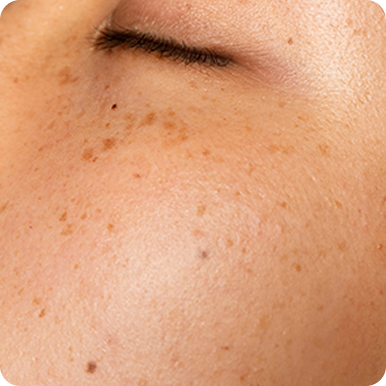
Considerations for Asian Skin Types
Individuals with Asian skin types (Fitzpatrick III–V) may have a higher tendency to develop post-inflammatory hyperpigmentation (PIH) following certain laser treatments.
Because the ruby laser operates at 694 nm, it interacts with melanin differently compared with shorter wavelengths such as 532 nm, which are more strongly absorbed in superficial epidermal pigment.
In selected cases, this wavelength may allow more controlled targeting of pigmentation while reducing excessive energy absorption within the superficial epidermis.
Treatment selection always depends on individual skin characteristics, and careful laser parameter selection is important to minimise unwanted pigmentation changes.
Conditions This Treatment May Address
Ruby laser treatments may be considered for individuals experiencing:
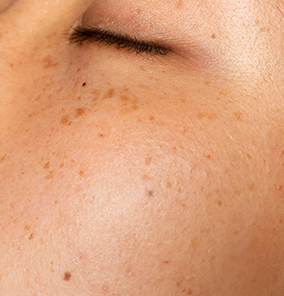
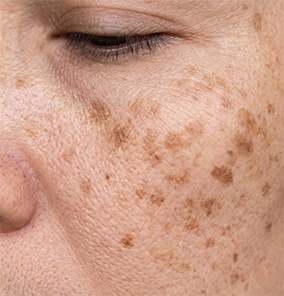
- dermal pigmentation
- freckles and sun spots
- selected birthmark-related pigmentation
- tattoo pigment
- pigmentation resistant to other treatments
Suitability depends on individual skin type, pigmentation type, and clinical assessment.
Some pigmentation concerns may arise from conditions such as sun exposure, inflammation, or hormonal influences. You can learn more about different pigmentation types on our Pigmentation Concern page.
Features of Ruby Laser Treatment at CLEO Aesthetic
Melanin-Specific Laser Energy
The ruby laser wavelength has a strong affinity for melanin, allowing targeted interaction with pigment particles within the skin.
Targeting Deeper Pigmentation
Ruby lasers may be useful in selected cases where pigment is located deeper within the skin.
Flexible Treatment: Individualised Laser Selection
The doctor may recommend ruby laser treatment based on the specific characteristics of the pigmentation being treated.

Benefits
Patients undergoing ruby laser treatments may experience improvements such as:
- reduction in visible pigmentation
- improved skin clarity
- more even skin tone
- gradual lightening of pigmented areas
Results vary depending on the type of pigmentation and the number of treatments performed.
Who May Benefit
Ruby laser treatments may be suitable for individuals who:
- have deeper pigmentation within the skin
- experience pigmentation that has not responded to other treatments
- wish to improve uneven skin tone caused by pigment deposits
A consultation allows the doctor to determine whether ruby laser treatment may be appropriate.
What to Expect During Treatment
Initial Consultation
The doctor will assess the type and depth of pigmentation to determine whether ruby laser treatment may be appropriate.
Treatment Procedure
During treatment:
1. The skin is cleansed and prepared.
2. Protective eye shields are provided.
3. The laser device delivers controlled pulses to the treatment area.
Treatment sessions typically take 15–20 minutes.
Recovery
Temporary redness or darkening of pigmentation may occur as the skin responds to treatment.
Gradual Improvement
Pigment particles gradually break down and are cleared by the body over time.
Multiple sessions may be recommended depending on the pigmentation type.
Side Effects and Considerations
Temporary effects may occur following treatment.
Possible effects include:
Redness In Treated Areas
Redness for Several Hours to a Few Days
Mild Swelling
Temporary Skin Sensitivity
These effects typically resolve as the skin recovers.
Because ruby lasers strongly interact with melanin, treatment suitability depends on skin type and careful clinical assessment.
Frequently Asked Questions
How many treatments are required?
The number of treatments varies depending on the type and depth of pigmentation being treated.
Will pigmentation darken before it improves?
Some pigmented lesions may temporarily darken before gradually lightening as pigment particles break down.
Is ruby laser suitable for all skin types?
Suitability depends on individual skin type and pigmentation characteristics. A consultation helps determine whether the treatment is appropriate.
Can ruby laser be combined with other treatments?
Yes. Ruby laser treatments may sometimes be incorporated into broader treatment plans depending on the individual’s skin condition.
Skin Gym Profile
Ruby laser treatments primarily support pigmentation improvement and skin tone clarity.
Pillar
Contribution
- Tone
- Lift
- Strength
- Hydration
Supporting Clearer and More Even Skin Tone
Pigmentation concerns may arise from sun exposure, inflammation, or deeper pigment deposits within the skin.
At CLEO Aesthetic, treatments such as ruby laser therapy may be incorporated into personalised treatment plans designed to improve skin clarity while maintaining skin stability.
A consultation with our doctor can help assess whether this treatment is suitable for your individual concerns.
 CLEO Aesthetics