
Key Takeaways
- Red cheeks can be triggered by heat and exercise, but recurring or long-lasting redness may also signal rosacea, visible blood vessels, acne inflammation, or a compromised skin barrier.
- At CLEO Aesthetic, we look at when the redness appears, how quickly it settles, what triggers it, and what else is happening in the surrounding skin before discussing treatment.
- Vascular redness, reactive skin, and post-acne redness do not necessarily respond to the same approach. Identifying the dominant pattern helps us decide what to prioritise.
- Treatment may include Yellow laser, medical-grade LED therapy, or supportive skin boosters depending on the underlying concern. Not every patient requires an in-clinic procedure.
Introduction
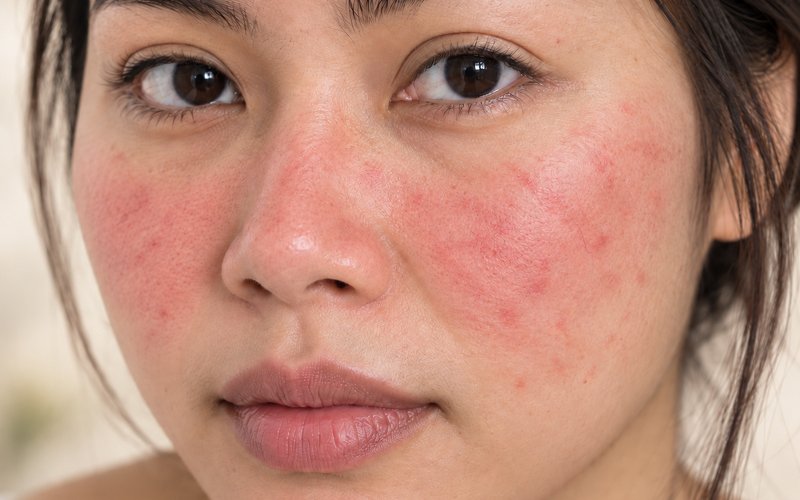
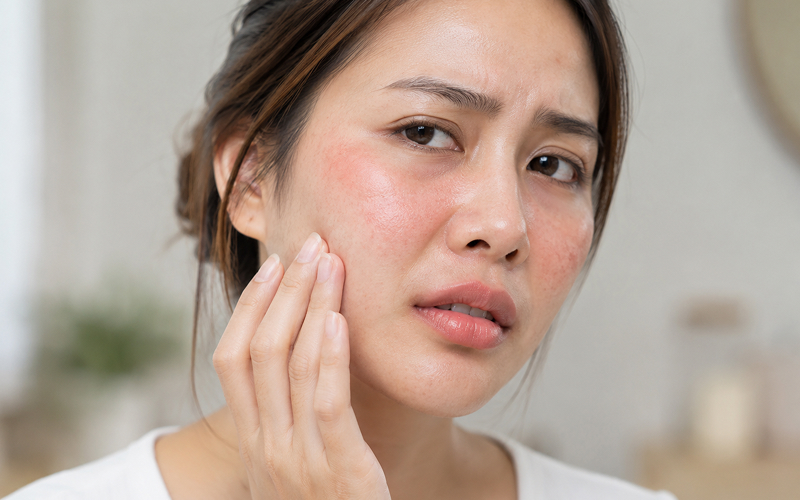
Do you often wonder why your cheeks are always so red? Sometimes, the cause is as simple as heat, exercise, or a hot shower. But when the redness keeps returning, takes longer to settle, or is present most of the time, it may point to an underlying pattern such as rosacea, visible blood vessels, acne-related inflammation, or skin sensitivity.
The challenge is that these causes can look similar at first glance, but they do not necessarily call for the same approach. That is why we look at the pattern of redness, what tends to trigger it, how long it lasts, and what else is happening in the skin before deciding what may help.
Common Causes of Facial Redness
For clients concerned about why their cheeks are always red, we first determine whether we are looking at temporary vascular flushing, ongoing inflammation, irritation, or a combination of factors. These are some of the more common causes we assess:
1. Rosacea
Rosacea is a chronic inflammatory skin condition that commonly causes redness across the cheeks and nose. It can also cause flushing, sensitivity, small bumps, and visible facial blood vessels. Triggers vary, but heat, sun exposure, spicy food, alcohol, and stress can make symptoms more noticeable.
2. Temporary Flushing
Heat, exercise, hot showers, spicy food, alcohol, and strong emotions can temporarily widen blood vessels in the face. This can make the cheeks look noticeably red, but the colour usually settles once the trigger passes.
3. Acne and Inflammation
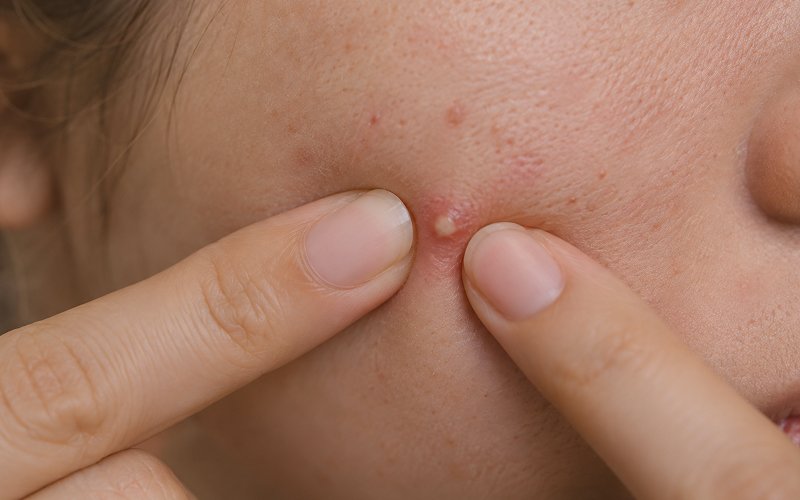
Active acne can make the surrounding skin look red and inflamed, particularly when breakouts are swollen or irritated. Red or pink marks may also remain after a pimple has healed, so ongoing breakouts can create a cycle of new redness.
4. Skin Irritation or Contact Dermatitis
Harsh skincare products, fragrances, frequent exfoliation, or ingredients that do not agree with your skin can trigger irritation or contact dermatitis. The redness may come with itching, stinging, dryness, or a rash, especially when the skin barrier is already compromised.
5. Sunburn and Sun Damage
UV exposure can cause short-term redness through sunburn and may also make superficial blood vessels more noticeable over time. In Singapore’s year-round sun, repeated exposure can be a key factor when redness is concentrated on exposed areas of the face.
6. Other Skin or Medical Conditions
Red patches on the face can also be associated with conditions such as eczema, seborrheic dermatitis, psoriasis, or lupus. Appearance and accompanying symptoms vary, so persistent, worsening, or unusual redness should be properly assessed rather than assumed to be simple sensitivity.
What We Look For Before Recommending Treatment
At CLEO Aesthetic, we look at when the redness appears, how long it lasts, what tends to trigger it, and what other symptoms come with it. Together, these clues help us work out what may be causing your cheeks to always be red.
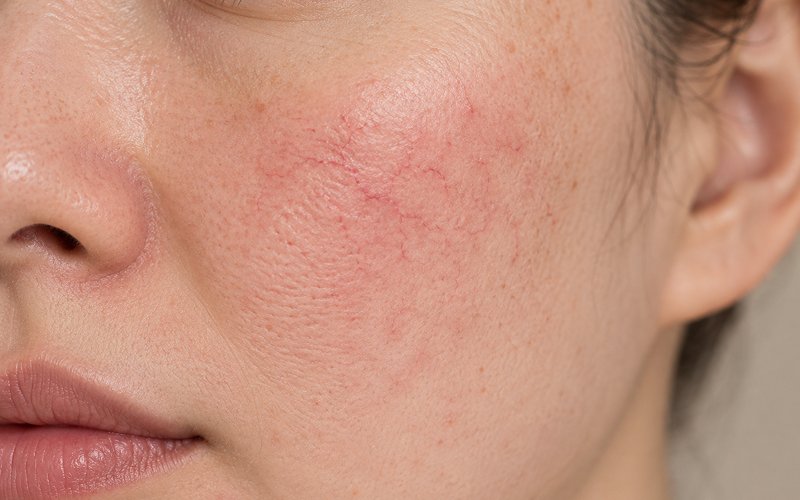
- The pattern and depth of the redness: We look at whether the redness is diffuse across the cheeks, concentrated around the nose, or made up of individual visible vessels. This helps us judge whether the concern is predominantly vascular or more inflammatory.
- How much redness remains between flare-ups: Some patients return to their normal skin tone once a trigger passes, while others have a persistent background redness. That difference can influence whether treatment is even necessary and what type may be appropriate.
- Whether there are visible vessels, bumps, scaling, or swelling: These accompanying signs give us more information about what is happening in the skin and whether vascular treatment, inflammation control, or barrier support should take priority.
- The condition of the skin barrier: We check for dryness, sensitivity, stinging, or recent irritation. If the skin is already reactive, we may need to stabilise it before considering laser or other procedures.
- What has already been tried: We ask about previous skincare, prescription treatments, lasers, recent procedures, and how the skin responded. This helps us avoid repeating approaches that were poorly tolerated and plan treatment more deliberately.
Once we understand which factors matter most, we can decide whether the skin needs vascular treatment, inflammation control, recovery support, or simply time to settle.
Our Treatments for Persistent Facial Flushing and Redness
1. When Vascular Redness Is the Main Concern
If the redness is mainly coming from superficial blood vessels or a persistent vascular pattern, our doctors may consider a Yellow laser treatment after assessing your skin. Its wavelength is selectively absorbed by haemoglobin, allowing controlled energy to target small vessels while limiting disruption to the surrounding skin. In suitable cases, this may help make visible vessels and associated vascular redness less noticeable.
2. When the Skin Is Inflamed or Reactive
If sensitivity or irritation is more prominent, calming the skin may take priority over more intensive treatment. This is particularly relevant when redness comes with stinging, dryness, or increased reactivity.
Medical-grade LED therapy may help calm inflammation and support recovery. Our doctors may recommend yellow light treatment at 590 nm to help reduce visible redness, while other wavelengths may be selected depending on whether the main concern is inflammation, sensitivity, or post-treatment healing. LED is often used alongside other treatments rather than as a standalone approach.
We may also consider a polynucleotide (PN) skin booster treatment, formulated with salmon DNA, when the skin needs help recovering after inflammation or repeated irritation. It does not directly target blood vessels. Instead, polynucleotides support the skin’s natural repair processes, which may improve resilience and help reactive skin recover over time.
3. When Redness Is Linked to Ongoing Acne
If red marks appear because inflammatory breakouts are still forming, treating the redness alone is unlikely to address the full problem. We first assess whether oil production, congestion, or ongoing inflammation continues to trigger new breakouts.
For selected patients, CLEO Bare Reset may be considered as a structured acne treatment programme. It combines a 1,726 nm sebum laser to reduce sebaceous gland activity, pore cleansing to manage congestion, PN skin boosters to aid recovery after inflammation, and medical-grade LED therapy to calm the skin. The aim is to reduce the cycle of new inflammation so the skin doesn’t keep developing fresh areas of post-acne redness.
4. When the Skin Mainly Needs Time to Settle
Not every case of persistent redness needs an in-clinic treatment. If the redness seems driven mainly by irritation or a disrupted skin barrier, we may first recommend simplifying your skincare routine and removing products that repeatedly sting, dry, or aggravate the skin.
Conclusion
If your cheeks are always red, it may stem from several different underlying causes, from temporary flushing and skin irritation to rosacea, acne-related inflammation, or visible superficial vessels.
At CLEO Aesthetic, we treat skin health as something to build over time, not a series of isolated fixes. We look at the pattern of redness, the condition of your skin barrier, and any ongoing inflammation before deciding what role, if any, treatment should play. The goal is a structured plan that improves skin stability gradually and evolves with how your skin responds.
Contact us today to learn more.
Frequently Asked Questions
1. Can skincare help reduce persistent cheek redness?
Sometimes. If dryness, irritation, or a weakened skin barrier is aggravating the redness, simplifying your routine can make a noticeable difference. Gentle cleansing, a suitable moisturiser, daily sunscreen, and cutting back on irritating actives may help the skin feel calmer and less reactive.
If the redness is mainly caused by rosacea or visible blood vessels, however, skincare is unlikely to remove them, and a medical assessment may be more useful.
2. When should you seek treatment if your cheeks are always red?
Consider getting it assessed if the redness is becoming more frequent, lasts longer than it used to, or appears even without an obvious trigger. It is also worth checking if the redness comes with burning, stinging, swelling, visible blood vessels, persistent bumps, or worsening sensitivity.
3. Can red marks from acne disappear on their own?
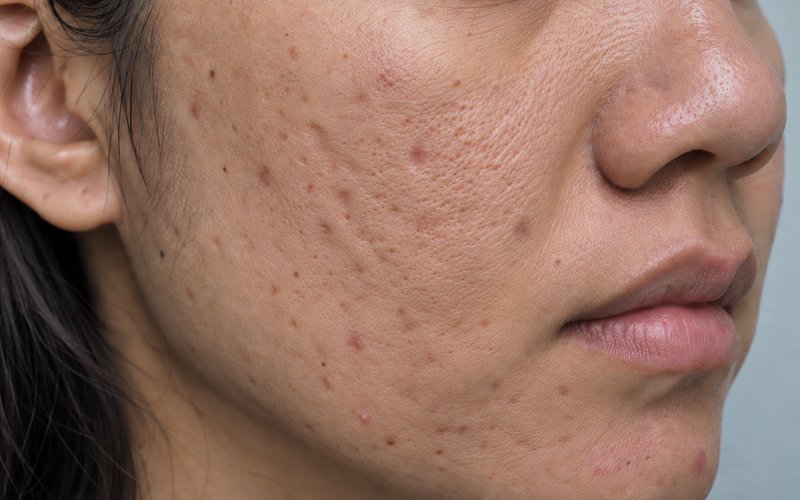
Some post-acne redness gradually fades as inflammation settles and the skin recovers, although the timeline varies. If new breakouts keep forming, controlling the acne helps prevent fresh marks from developing. Where redness is accompanied by textural or pitted scarring, acne scarring treatment may also be considered separately based on the type and depth of the scars.
 CLEO Aesthetics