
Key Takeaways
- Pitted acne scars are not all structurally the same. Their shape, depth, distribution, and surrounding skin quality will guide our treatment approach.
- Scar treatment starts with a personalised assessment. We look at whether scars are shallow, deep, sharply defined, widespread, or accompanied by pigmentation, enlarged pores, or active acne.
- If the patient has any ongoing inflammatory acne, controlling the breakouts may take priority. This helps prevent the formation of new scars while existing ones are being treated.
- Acne scars of different depths may require different approaches. Fractional picosecond laser, microneedling, fractional CO₂ laser, and supportive injectables each play a different role.
- Improvement is usually gradual. Acne-scarring treatment works best as part of a longer-term strategy that includes acne control, recovery, skincare, and consistent daily habits.
Introduction
If pitted acne scars are making you feel self-conscious about your skin, it can be tempting to focus on the most visible pits and look for a treatment that will smooth them out quickly. The problem is that scars that look similar on the surface can differ considerably in depth, shape, and the amount of supporting tissue lost.
At CLEO Aesthetic, we therefore assess the scar pattern before deciding how to treat it. We look at the type and depth of the scars, how widely they are distributed, whether acne is still active, and how the surrounding skin is likely to respond and recover. These factors help us decide whether resurfacing, collagen remodelling, supportive treatments, or a combination of approaches is most appropriate.
Different Types of Pitted Acne Scars We Often See
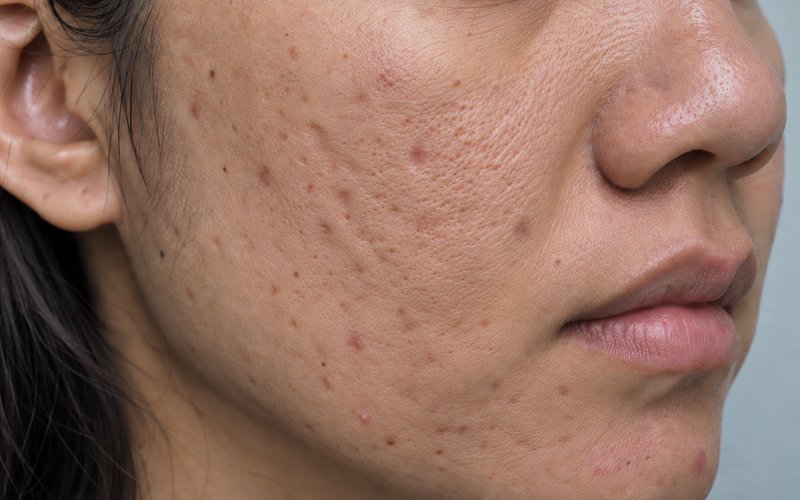
Pitted acne scars, also known as atrophic acne scars, develop when inflammatory acne damages collagen and supporting tissue during the healing process. Common patterns include:
- Rolling scars: These are usually broad, shallow depressions with sloping edges. They can make the skin look uneven or wavy, especially across the cheeks, and may become more noticeable when light falls across the face from the side.
- Ice pick scars: These are narrow, deep scars that look like small punctures in the skin. Their surface opening can be relatively small, but the scar may extend more deeply into the dermis.
- Boxcar scars: These are wider depressions with more clearly defined edges and a flatter base. They can vary from shallow to relatively deep.
Most individuals have a combination of different scar patterns, typically across the cheeks or temples. They may also occur alongside other issues, such as enlarged pores, post-acne pigmentation, redness, or active breakouts.
What We Look at Before Recommending Treatment
Before recommending treatment, our doctors assess both the individual scars and the overall condition of the skin:
- Acne scar depth and shape: Shallower depressions behave differently from deeper, more sharply defined scars. We also look at scar width, the slope or sharpness of its edges, and how much surrounding tissue is affected. These details help determine how much resurfacing or collagen remodelling may be needed.
- How much of the face is affected: A few isolated scars may be approached differently from widespread uneven texture across the cheeks or temples. We look at whether individual depressions are the main concern, or whether improving the overall skin surface would make a greater difference to how the scars appear.
- Whether acne is still active: If inflamed breakouts are still appearing regularly, controlling them may take priority. Treating existing scars while new inflammatory lesions continue to form can cause new scars to develop at the same time.
- Skin type and recovery: We consider how your skin responds to inflammation, irritation, and previous procedures. This is particularly relevant for Asian skin, which can be more prone to post-inflammatory hyperpigmentation after certain treatments. Treatment intensity and recovery time therefore need careful planning.
How We Match Treatments to Different Scar Types
Once we understand the scar pattern, we can decide which treatment may be appropriate.
Shallower Scars and Uneven Texture
When scarring is relatively shallow, and the main concern is uneven texture, enlarged pores, or mild surface irregularity, we may consider treatments that stimulate gradual skin remodelling, such as:
- Pico laser treatment with fractional settings creates microscopic treatment zones beneath the skin using ultra-short pulses. These controlled micro-injuries stimulate collagen production and tissue remodelling while limiting disruption to the surrounding skin.
- Microneedling with regenerative serum may also be considered. Fine needles create controlled microchannels that trigger the skin’s natural repair response, while regenerative serums are applied afterwards to support recovery and overall skin quality.
Deeper or More Pronounced Scars
For deeper acne scars, our doctors may consider fractional laser treatment when a greater degree of resurfacing and collagen remodelling is needed.
One option is fractional CO₂ laser, an ablative treatment that creates controlled micro-columns of resurfacing within the skin. Rather than treating the entire surface uniformly, the laser removes small portions of the outer skin layer in microscopic zones while stimulating collagen regeneration deeper in the skin. Over time, this repair response can help remodel scarred tissue and improve the appearance of deeper depressions.
When We Also Want to Support Dermal Quality
In some patients, the scar itself is only part of the concern. The surrounding skin may also show reduced firmness, uneven texture, or changes linked to previous inflammation, so we may include treatments that support dermal quality alongside resurfacing.
- Type I collagen injection: We may consider this skin booster treatment when reduced dermal support or uneven texture contributes to the overall appearance of acne scarring. Rather than resurfacing the scar directly, it helps reinforce the skin’s structural framework and support firmer, more resilient dermal tissue.
- PN skin booster: Polynucleotides support the skin’s repair and recovery processes after inflammation or structural damage. They do not directly remove a pitted scar, but may be useful when the surrounding skin also needs support for recovery, resilience, and overall skin quality.
- CLEO Bare Reset: If active acne is still occurring alongside existing scars, we may first focus on reducing the factors that could lead to further scarring. CLEO Bare Reset combines a 1,726 nm sebum laser, pore cleansing, PN skin boosters, and medical-grade LED therapy to address excess oil, congestion, inflammation, and skin recovery as part of a broader acne-management plan.
Treat the Scar Pattern, Not Just the Pit
Improving pitted acne scars usually takes more than choosing a single acne resurfacing treatment. The depth and type of scarring, whether acne is still active, how the skin responds to inflammation, and the condition of the surrounding tissue can all influence what should come next.
At CLEO Aesthetic, our approach is built around personalised, progressive treatment planning. Rather than applying the same protocol to every patient, our doctors adjust the treatment strategy according to how the skin responds over time, whether that means prioritising acne control, introducing resurfacing, or supporting dermal recovery alongside it.
Get in touch with us today to learn more.
Frequently Asked Questions
1. Can pitted scars disappear completely?
Not usually. Because atrophic acne scars involve structural changes in the skin, treatment generally aims to make them shallower and less noticeable rather than remove them completely. How much improvement is possible depends on factors such as scar type, depth, skin response, and the treatments used.
2. What skincare can I use alongside treatment for acne scars?
Skincare can support the overall treatment plan, but it cannot fully correct deeper pitted scars on its own. We generally focus on keeping the skin barrier stable, using daily sunscreen to reduce the risk of post-inflammatory pigmentation, and introducing suitable ingredients such as retinoids or exfoliating acids only when the skin can tolerate them. If your plan includes resurfacing treatments, you may also need to simplify your routine before and after each session to support recovery.
3. What is the difference between post-acne pigmentation and pitted acne scars?
Post-acne pigmentation usually appears as flat brown, red, or purplish marks left behind after a breakout, while pitted acne scars involve an actual depression or change in the skin’s surface. The two can occur together, which can make the skin look more uneven overall.
 CLEO Aesthetics