
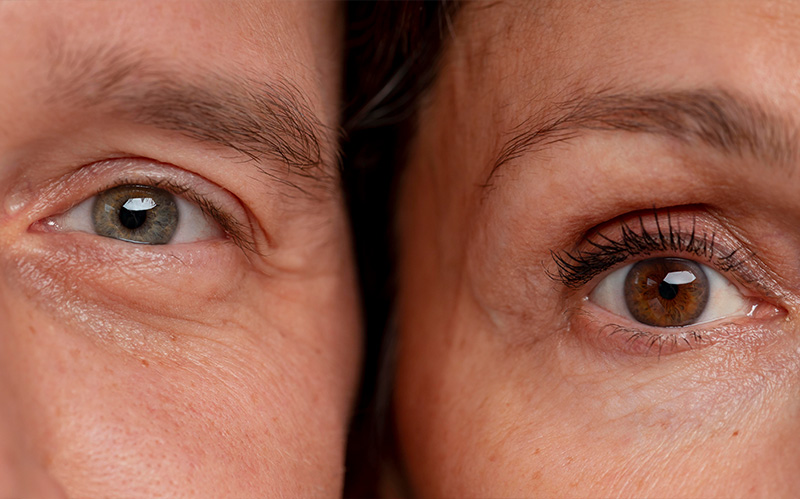
Key Takeaways
- Premature wrinkles can be a sign of different changes in the skin, from dehydration and sun damage to reduced dermal support.
- Different causes call for different treatments. Botulinum toxin targets movement-related lines, while skin boosters and biostimulators may be considered for hydration or dermal support.
- Daily sunscreen, careful use of active ingredients, and healthy lifestyle habits can help reduce avoidable stress on the skin.
- At CLEO Aesthetic, the focus is on understanding how your skin is changing and building a structured plan around those needs, rather than treating each wrinkle in isolation.
Introduction
You may first notice that a forehead line no longer disappears completely. The skin around your eyes may look more creased at the end of the day. Your complexion may feel rougher, look duller, or seem less resilient than it did a few years ago.
But having premature wrinkles does not necessarily mean that you are ageing earlier than expected. At CLEO Aesthetic, we take a more holistic view of your skin by considering other factors, including dehydration, barrier disruption, and sun damage. This allows us to craft a personalised treatment plan that addresses what is actually changing in your skin, rather than simply treating the wrinkles you can already see.
What Your Early Wrinkles May Be Telling You
At CLEO Aesthetic, we do not look at early wrinkles as an isolated concern. We also look at what is happening around them, because the way a line appears can give us useful clues about what may be changing in your skin and the causes of your premature wrinkles.
1. Lines That Appear Mainly When You Move
If forehead lines, frown lines, or crow’s feet appear when you smile, squint, or raise your eyebrows, repeated muscle movement is likely playing a major role. Over time, these dynamic wrinkles can become more persistent as the skin gradually loses collagen and resilience.
2. Fine Lines Alongside Dryness and Tightness
If your lines become more noticeable when your skin feels dry, tight, or rough, dehydration or barrier disruption may be contributing. A weakened skin barrier loses water more easily, making existing creases look deeper even when there has not been significant structural ageing.
3. Wrinkles Alongside Roughness and Dullness
When fine lines develop together with rougher texture or uneven tone, we also consider cumulative sun exposure. UV radiation gradually damages collagen and elastin while affecting pigmentation and skin renewal, so the change often extends beyond wrinkles alone.
4. Lines That Remain Visible at Rest
When expression lines no longer disappear after your face relaxes, this can suggest that the skin has less structural support than before. These static wrinkles may occur alongside reduced firmness, thinner-feeling skin, or lower resilience, pointing to changes within the dermis rather than movement alone.
5. Skin That Seems to Recover More Slowly
Poor sleep, smoking, chronic stress, and environmental exposure can place additional stress on the skin. You may notice this first as dullness, roughness, or skin that looks less refreshed before more established signs of skin ageing become apparent.
In practice, these changes often overlap. A forehead line, for example, may be influenced by both repeated movement and declining skin resilience. That is why understanding the pattern matters more than simply identifying the wrinkle.
The Treatments We Recommend for Premature Skin Ageing

For clients who come in with concerns about premature wrinkles and skin ageing, we may recommend a series of treatments depending on the underlying cause. The aim is to match the treatment to what is actually changing in the skin, rather than using the same approach for every early sign.
1. Botulinum Toxin Treatment
Our doctors may consider botulinum toxin treatment if repeated facial movement and dynamic lines are the main cause of your premature ageing. Through a series of injections, this treatment uses botulinum toxins to temporarily relax selected muscles, helping to soften expression lines such as forehead lines, frown lines, and crow’s feet.
However, botulinum toxin treatment does not directly address static wrinkles. If you have persistent premature wrinkles that remain visible at rest, our doctor may recommend a different strategy.
2. Bio-Remodelling Hyaluronic Acid (HA) Skin Booster
If dehydration is the main cause behind your wrinkles, we may consider bio-remodelling HA skin boosters. Hyaluronic acid is a naturally occurring molecule in the body that can help retain and attract water within the skin. By improving moisture levels, the treatment may help the skin feel smoother and more supple, as well as reduce the appearance of dehydration lines. Certain formulations can also help stimulate the production of collagen and elastin, improving skin elasticity and overall quality.
3. Type I Collagen Skin Booster
A Type I collagen skin booster may be considered when fine lines occur alongside reduced firmness, uneven texture, or weaker dermal support. Type I collagen is one of the main structural proteins that helps give the skin strength and firmness. By introducing collagen components into the dermis, the treatment can reinforce this framework and support skin that feels thinner, less firm, or less resilient over time.
4. PLLA (Poly -L-Lactic Acid) Biostimulator
PLLA biostimulators may be better suited to deeper structural changes, such as reduced firmness, structural thinning, mild laxity, or early changes in facial support. After injection, microscopic PLLA particles stimulate the skin’s collagen-building processes, encouraging new collagen to form around the treated areas. As collagen production increases, your skin may become more firm and resilient over time.
How to Prevent Premature Ageing at Home
While you cannot stop natural ageing, you can reduce unnecessary stress on your skin by adopting a few consistent habits:
- Wear sunscreen, even when indoors: UV exposure can still reach the skin through windows, so daily broad-spectrum sunscreen is useful even on days when you spend most of your time inside.
- Use anti-ageing products with care: Vitamin C serums and over-the-counter retinoids can support skin quality, but introducing too many active ingredients at once may trigger irritation. Start gradually and scale back if your skin becomes dry, tight, or sensitive.
- Quit smoking and limit alcohol intake: Smoking contributes to collagen breakdown, while frequent alcohol intake can worsen dehydration and make the skin look duller and less resilient.
- Eat whole foods loaded with antioxidants: Fruits, vegetables, nuts, seeds, and other antioxidant-rich foods can help support the body’s defence against oxidative stress, which plays a role in skin ageing.
Conclusion
Premature wrinkles are not always a sign that you need stronger anti-ageing treatments. They can also reflect dehydration, repeated facial movement, sun exposure, barrier disruption, or early changes in dermal support. The more useful approach is to understand which of these factors are affecting your skin, then build a plan around them.
Here at CLEO Aesthetic, an aesthetic clinic in Singapore, we follow a Skin Gym philosophy that takes a longer-term view of skin health. Rather than treating each new line in isolation, our doctors assess how your skin is changing and recommend care that supports its hydration, resilience, and structural quality over time.
If you are starting to notice persistent fine lines, roughness, dullness, or reduced firmness, book a consultation with us today to find out what your skin needs.
Frequently Asked Questions
1. Does sleeping on one side cause wrinkles to form faster?
Yes, repeated pressure on the same side of your face can contribute to sleep lines over time. However, sun exposure, repeated facial movement, and overall skin quality usually have a much greater influence on when wrinkles become noticeable.
2. At what age should I start anti-ageing treatments?
There is no ideal age. We recommend considering treatment when you notice persistent changes such as fine lines that remain at rest, reduced firmness, or rougher skin texture. The focus should be on what your skin needs, not the number on your birthday.
3. Do I need to change my skincare routine as I move from my 20s into my 30s?
Not necessarily, but your skin’s needs often change over time. As collagen production gradually declines, it may benefit from more hydration, barrier support, and carefully introduced active ingredients. A routine that worked in your early 20s may not be enough, or even suitable, a decade later.
 CLEO Aesthetics