
Key Takeaways
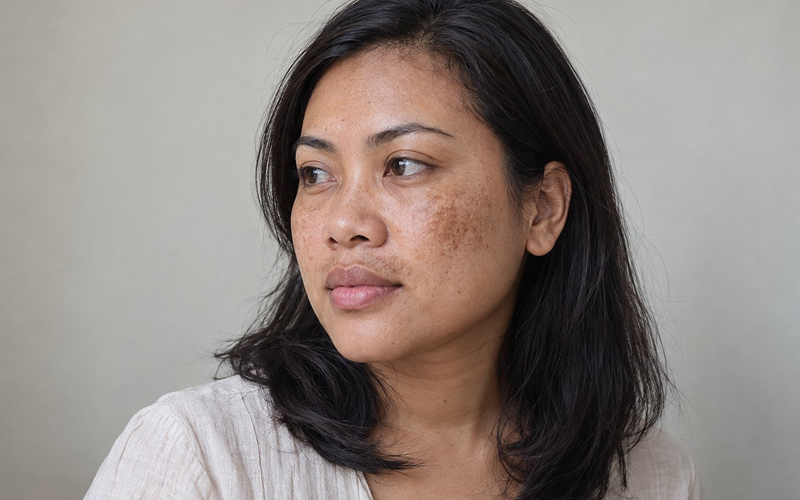
- Freckles usually appear as small, clearly defined spots linked closely to UV exposure, while melasma tends to form broader, more symmetrical patches that can be persistent and prone to recurrence.
- At CLEO Aesthetic, we assess the pattern, distribution, depth, triggers, and behaviour of pigmentation before deciding how directly to treat it.
- Freckles may suit more targeted approaches such as RUBY laser, Pico laser, or skin-renewal treatments, depending on the pigment identified.
- Melasma generally requires a more conservative, layered strategy that may include topical or oral management, supportive skin boosters, carefully selected laser treatment, and consistent sun protection.
Introduction
In Singapore’s year-round heat, sun-induced pigmentation is not uncommon. You might notice small brown spots appearing across the cheeks and nose after years of UV exposure, but how do you tell when they are freckles and when they point to something more persistent, such as melasma?
Although both involve excess pigment, freckles and melasma are different conditions with different patterns, triggers, and behaviour over time. Freckles are usually more discrete and may respond to direct pigment-targeting treatments, while melasma often requires a more cautious, longer-term approach because it can be reactive and prone to recurrence. That difference affects how we treat them.
Below, we explain what we look for when distinguishing between the two, and how those differences determine the treatment approach we may recommend.
Melasma vs Freckles: How We Tell the Difference
At CLEO Aesthetics, we will usually consider where the pigment appears, what tends to trigger it, how it changes over time, and how deeply it seems to sit within the skin.
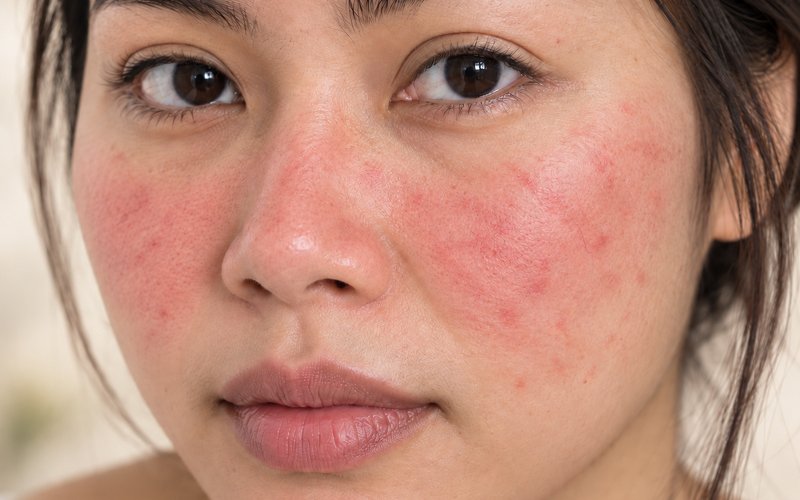
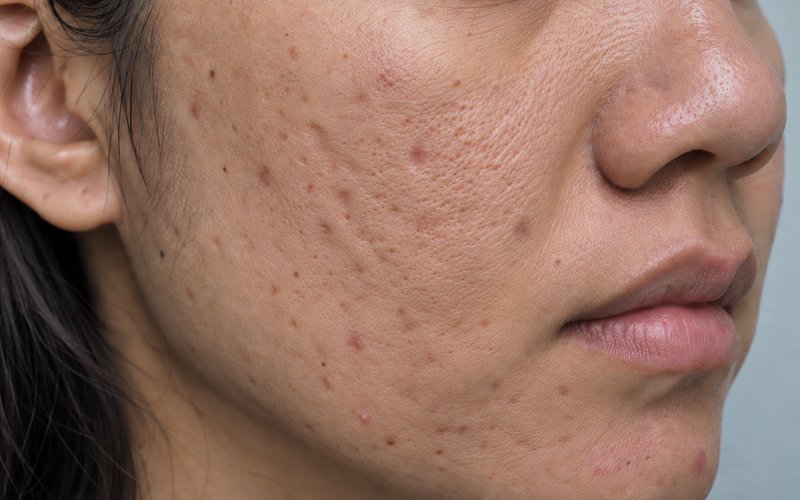
- Pattern: Freckles usually appear as small, flat, clearly defined brown spots. Melasma tends to form broader brown or grey-brown patches with softer, less distinct edges. This difference in shape is often one of the first clues we look for during assessment.
- Distribution: Freckles are commonly scattered across areas that receive more sun exposure, such as the cheeks, nose, forehead, and sometimes the shoulders. Melasma is more likely to appear symmetrically, particularly across both cheeks, the forehead, upper lip, or bridge of the nose.
- Triggers: Freckles are mainly driven by UV exposure and often darken or become more noticeable after repeated sun exposure. Melasma can also worsen with UV exposure, but other factors may contribute, including heat, pregnancy-related hormonal changes, hormonal contraceptives, and a genetic predisposition.
- Behaviour over time: Freckles can become more prominent during sunnier periods and may fade when UV exposure decreases. Melasma is usually more persistent. It may lighten and darken over time, recur after treatment, or flare again when its triggers are not well controlled.
- Pigment depth: Freckles are generally more superficial, whereas melasma can involve pigment at different skin depths. Some cases are predominantly epidermal, while others may have a deeper dermal component. We assess this because pigment depth can affect how readily it responds to treatment and which options are appropriate.
You may also have both freckles and melasma at the same time, along with other types of pigmentation such as sun spots or post-inflammatory pigmentation.
How We Approach Freckles vs Melasma Removal
Once we have a clearer idea of the type of pigmentation we are dealing with, we can decide how directly to treat it.
Freckles are usually more localised and superficial, so selected spots may respond well to pigment-targeting treatments. Melasma is more complex and prone to recurrence, so we generally take a more conservative approach that considers skin reactivity, ongoing triggers, and the risk of inflammation worsening the condition.
Treatment We Recommend for Freckles
1. 694 nm Ruby Laser
The 694 nm Ruby laser is strongly absorbed by melanin and penetrates approximately 0.75 mm into the skin. This allows us to target selected superficial to mid-level freckles and sun spots more precisely. As the pigment absorbs laser energy, it breaks into smaller fragments that the body gradually clears over time.
2. Pico Laser
Pico lasers deliver energy in ultra-short picosecond pulses, creating a photoacoustic effect that breaks pigment into smaller fragments without relying mainly on prolonged heat. For pigment that appears to sit deeper, we may consider a 1064 nm Pico laser. Its longer wavelength penetrates deeper, reaching up to approximately 3 mm into the reticular dermis while interacting less strongly with melanin at the skin surface. Our doctors will select the wavelength and treatment settings based on the pigment we identify during assessment.
3. CLEO ExoPeel
When freckles occur alongside mild superficial pigmentation or uneven skin tone, we may consider a comprehensive skin-renewal treatment. It combines chemical exfoliation to reduce accumulated surface skin cells with superficial microneedling, a topical regenerative serum, and a peptide recovery mask. This treatment plan can help promote a more even skin tone and surface renewal. Suitability depends on your skin condition, sensitivity, and the pigmentation we identify during assessment.
Treatments We Recommend for Melasma
1. Topical or Oral Management
For selected patients, our doctors may recommend topical pigment-control treatments or oral medication as part of the wider management plan. We consider these options based on the pattern and severity of the melasma, medical history, current medications, and individual suitability.
2. Polynucleotide (PN) Skin Booster
When melasma occurs alongside sensitive, reactive, or less resilient skin, we may consider a PN skin booster formulated with salmon DNA. While polynucleotides do not directly remove melanin, they help support the skin’s regenerative microenvironment, helping skin cells repair and recover after inflammation or environmental stress. This can help strengthen overall skin resilience and support healthier dermal function as part of a broader melasma management plan.
3. 5-Point Hyaluronic Acid (HA) Skin Booster
For patients whose melasma is accompanied by dehydration or reduced skin resilience, our doctors may recommend our 5-point HA skin booster. Hyaluronic acid attracts and retains water within the dermis, helping improve moisture balance in dehydrated skin. The formulation is designed to spread evenly through the skin from a small number of injection points, helping to improve the skin’s hydration, smoothness, and elasticity.
Better-hydrated, more resilient skin may be better able to tolerate pigment-directed treatments and recover from irritation or inflammation, both of which need to be carefully managed in melasma-prone skin.
4. Conservative Pigment Laser Treatment
Laser treatment may be considered for selected cases of melasma, but we usually take a lower-intensity, more controlled approach than we would for isolated freckles or sun spots. For example, our doctors may use a 1064 nm Pico laser but at more conservative settings to deliver ultra-short pulses that create a photoacoustic effect, helping fragment pigment without relying mainly on prolonged heat. We also pay close attention to treatment intensity, number of passes, and the interval between sessions.
5. Skincare and Sun Protection Recommendations
For melasma, in-clinic treatments are only one part of the plan. We also emphasise consistent sun protection, as UV exposure can stimulate melanin production and make pigmentation more likely to darken or recur. Alongside medical or in-clinic treatment, we may recommend daily broad-spectrum sunscreen, reapplication when you are outdoors for extended periods, and practical measures such as seeking shade or wearing a hat to limit repeated UV exposure.
Conclusion
Melasma and freckles may look similar at first, but they behave differently and often need different treatment strategies. That is why we assess the pattern, depth, triggers, and skin response before deciding what to treat and how aggressively to approach it.
At CLEO Aesthetic, this fits into our wider Skin Gym philosophy: treating skin health as something to build and maintain over time, rather than chasing one-off fixes. We focus on structured treatment plans that can evolve with your skin, combining pigment control, skin recovery, and ongoing maintenance where needed.
Book a consultation to have your skin assessed and discuss a plan based on what we observe.
Frequently Asked Questions
1. Can freckles turn into melasma?
No. Freckles and melasma are separate forms of pigmentation, so freckles do not gradually develop into melasma. That said, both can darken or become more noticeable with UV exposure, which can sometimes make the overall pigmentation look more extensive over time.
2. Do freckles need to be treated?
Not necessarily. Freckles are usually harmless, and treatment is generally considered for cosmetic reasons rather than medical necessity. However, if you notice a pigmented spot that is new, changing in size, shape, or colour, or looks noticeably different from your other freckles, it is worth having it medically assessed before considering aesthetic treatment.
3. Can melasma affect men too?
Yes. Melasma is more common in women, but men can develop it too. UV exposure, genetics, heat, and other individual factors can all play a role. We therefore assess melasma by its pattern, triggers, depth, and behaviour over time, rather than assuming it is linked to gender alone.
 CLEO Aesthetics