
Key Takeaways
- A heavier-looking eye area is not always caused by drooping eyelids. Brow position, skin laxity, muscle activity, and facial support can also contribute.
- We assess the underlying cause before recommending whether non-surgical treatment may help create a more lifted-looking eye area.
- Sofwave may improve mild skin laxity around the brow, while botulinum toxin may help achieve a subtle brow lift by relaxing selected muscles.
- PLLA biostimulators may improve dermal support around the temples and upper cheeks, but they do not directly lift the eyelids or eyebrows.
- Non-surgical treatments cannot remove significant excess eyelid skin or correct true eyelid ptosis. More pronounced drooping, particularly when it affects vision, may require specialist assessment.
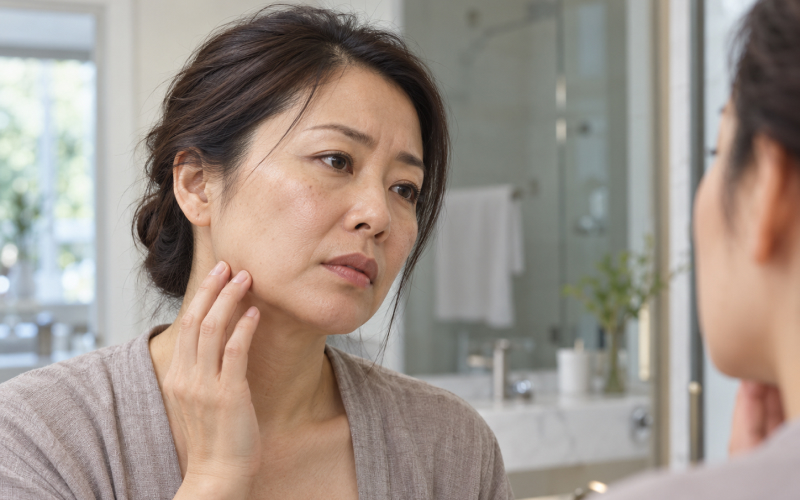
Noticing that your upper eyelids look heavier or your eyes appear less open can make you wonder whether there’s a way to lift the area without surgery. However, what looks like drooping eyelids may not be caused by the eyelids themselves. Sometimes, the change comes from a lower brow position, reduced skin firmness, or changes in the surrounding facial structure.
If you’re looking for ways to lift your droopy eyelids and the surrounding area without surgery, the first step is understanding what’s contributing to the issue. Here’s how we conduct assessments at CLEO Aesthetic to determine whether non-surgical treatment can realistically help, or whether a different approach is more appropriate.
Is It Possible to Lift Droopy Eyelids and the Eye Area Without Surgery?
Yes, in some cases. Non-surgical treatments may help the eye area look more lifted, particularly when the heaviness is caused by mild brow drooping, reduced skin firmness, or muscle activity around the upper face. For instance, if a lower brow is causing skin to gather over the upper eyelid, improving its position or the firmness of the surrounding skin may help the eyes appear more open.
However, there are limits to what these treatments can achieve. They cannot remove significant excess eyelid skin or correct true eyelid ptosis, where the eyelid itself sits abnormally low.
This is why a detailed assessment is needed to determine the underlying cause of the drooping before treatments can be recommended.
What We Assess Before Recommending Treatment
At CLEO Aesthetic, our doctors will look at several factors that may be contributing to the appearance:
- Brow position: A lower brow can cause skin to gather over the upper eyelid, making the eyes appear less open.
- Skin laxity: Reduced firmness around the forehead and brow can contribute to upper eyelid hooding.
- Muscle activity: The muscles that raise and lower your eyebrows influence where they naturally sit.
- Facial support: Changes around the temples and upper cheeks may affect how the surrounding eye area looks.
- Facial symmetry: One eyebrow or eyelid may naturally sit lower than the other.
- Eyelid structure: Excess skin or upper eyelid drooping may require specialist assessment.
We also consider whether these features have changed over time or have always been part of your facial structure. After all, naturally hooded eyelids or lower-set brows aren’t necessarily signs of ageing.
What We May Recommend for a More Lifted Eye Area
From there, we will consider different approaches depending on whether the concern involves skin firmness, brow movement, or reduced support in the surrounding areas of the face.
1. For Mild Skin Laxity Around the Brow: Sofwave
If the skin around your brows has become less firm, it may contribute to a heavier-looking upper eye area. In such cases, we may consider Sofwave, a skin-tightening treatment, to help improve skin firmness. This treatment delivers controlled ultrasound energy into the mid-dermis, stimulating the skin’s natural collagen production. As collagen gradually remodels, the skin around the brow may become firmer, creating a subtle lifting effect.
However, Sofwave does not physically lift the eyelid or remove excess skin, so its ability to lift droopy eyelids is limited. Results typically develop over several weeks as collagen remodels, with the degree of improvement depending on your skin condition and the extent of laxity.
2. For Muscle-Related Brow Lift Without Surgery: Botulinum Toxin
Your eyebrows are controlled by muscles that pull them upwards and downwards. When the muscles pulling them downwards contribute to a lower brow position, we may consider botulinum toxin treatment. Botulinum toxin works by temporarily blocking nerve signals to targeted muscles, reducing their ability to contract. When injected into certain muscles that pull the eyebrows downwards, it may allow the brows to sit slightly higher, creating a subtle lifting effect and making the eyes appear more open.
During the consultation, we will assess how your brows move when you raise your eyebrows, frown, and relax your face. This helps us plan treatment while preserving natural facial expressions, as injecting the wrong muscles or using an unsuitable dose could make the brows appear heavier instead.
Any lifting effect is temporary, typically becoming noticeable within several days and lasting around three to four months, although results vary.
3. For Reduced Facial Support: Poly-L-lactic Acid (PLLA) Biostimulators
Volume loss or thinning around the temples and upper cheeks can affect facial contours and how the surrounding eye area looks. Where these structural changes are a concern, we may consider PLLA biostimulators to help improve dermal support. PLLA stimulates the body’s natural collagen production, gradually improving skin structure and facial contours over several weeks to months.
However, this treatment does not directly lift the eyelids or eyebrows. Its role is to improve support in the surrounding face, making it more appropriate when changes in facial structure contribute to the overall appearance of the eye area.
When Non-Surgical Treatment May Not Be Enough
While non-surgical treatments may help improve mild brow drooping or skin laxity, they may not be able to lift droopy eyelids, particularly when there is significant sagging or an issue with the eyelid itself.
We recommend further medical or surgical assessment if you have:
- Significant excess eyelid skin: Loose skin that folds over the upper eyelid and may interfere with vision.
- Pronounced or worsening drooping: Eyelid drooping that becomes more noticeable over time, rather than mild changes in skin firmness.
- True eyelid ptosis: A condition in which the upper eyelid sits abnormally low because of an issue with the muscles or nerves that lift it.
- Vision obstruction: Drooping eyelids that make it difficult to see clearly, particularly in the upper field of vision.
Sudden eyelid drooping, especially when accompanied by double vision, unequal pupils, or a severe headache, requires urgent medical attention.
For significant sagging or true eyelid ptosis, an ophthalmologist or oculoplastic specialist can assess whether surgery or another form of droopy eyelid treatment is appropriate.
Conclusion
If you’re considering ways to lift droopy eyelids and the surrounding eye area, the right approach depends on what’s causing the heavier appearance. Mild brow drooping or skin laxity may respond to non-surgical treatments, while significant sagging or true eyelid ptosis may require specialist care.
About CLEO Aesthetic
Led by Dr Paul Yow, CLEO Aesthetic is a doctor-led aesthetic clinic in Singapore that takes a structured, long-term approach to skin health. Guided by our Skin Gym philosophy, we focus on personalised assessments and evidence-based treatments, prioritising gradual improvements over quick fixes.
Book a consultation with CLEO Aesthetic to explore your options today.
Frequently Asked Questions
1. Can a non-surgical treatment make my eyes look less tired?
Possibly. If mild brow descent, reduced skin firmness, or changes in surrounding facial support partly cause the tired appearance, suitable treatment may help the eyes look more open. However, dark circles, under-eye hollowing, and true eyelid ptosis have different causes. We assess these concerns separately rather than assuming they require the same treatment.
2. Will treating the brow make my eyebrows look unnatural?
Not necessarily. With botulinum toxin, the aim is generally a subtle adjustment rather than a dramatic change in eyebrow position. Our doctors assess your natural brow shape, facial symmetry, and muscle movement when planning treatment. However, unwanted asymmetry or excessive brow elevation or lowering can still occur.
3. How soon will I see a lifting effect?
The timeline depends on the treatment. Botulinum toxin may produce visible changes within several days, with the full effect generally developing within approximately two weeks. Sofwave and PLLA biostimulators rely on gradual collagen-related processes, so improvements may take several weeks to months to become noticeable. Results vary according to individual skin characteristics and treatment response.



 CLEO Aesthetics