Key Takeaways
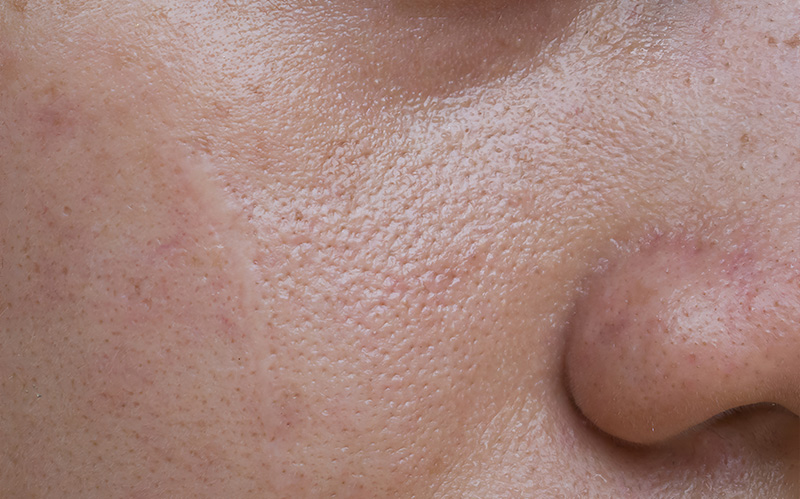
- Excessive sebum production, leading to congestion and reduced skin elasticity, is a common cause of large pores.
- Pores cannot simply be “closed”. The more useful approach is to identify what makes them appear more prominent, then address the underlying factor.
- A targeted acne laser may be used to help reduce sebaceous gland activity, while fractional laser treatments may help address uneven skin texture.
- Our doctors may also consider skin boosters if your enlarged pores are caused by dehydration or reduced skin quality.
Introduction
If your pores seem more noticeable than they used to, especially around the nose and cheeks, it is easy to assume that you simply need better cleansing or stronger exfoliation. However, visible pores are not always caused by surface congestion alone.
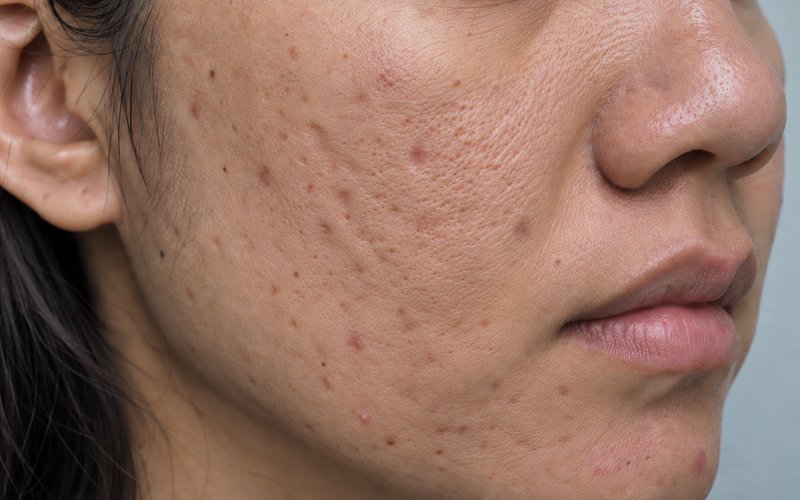
So, what causes large pores? In many cases, it is a combination of factors such as excess oil, clogged pores, previous acne, and reduced support from collagen and elastin. This is also why the same skincare routine may not work equally well for everyone.
At CLEO Aesthetic, we look at what is making your pores appear more prominent before deciding what may help. That means assessing oil production, congestion, acne scarring, hydration, and overall skin quality, then addressing the factors that are most relevant to your skin.
What Causes Large Pores?
- Genetics: Your natural pore size is partly determined by genetics, including the size of your hair follicles and sebaceous glands. Some individuals may naturally have larger, more visible pores.
- Age: As you age, collagen and elastin production in the skin gradually declines. This causes the skin around the pores to lose some of its support, which can make them appear wider.
- Excess oil and sebum production: Higher sebum production can make pores look larger. Oil may also mix with dead skin cells and debris, causing clogged pores and oily skin.
- Prolonged sun exposure: Repeated exposure to ultraviolet (UV) radiation can cause collagen to break down and reduce skin elasticity over time. As the skin becomes less firm, pores may look more noticeable, especially around the cheeks and nose.
- Acne: Repeated inflammation may lead to collagen breakdown in the dermis and cause scarring. As the skin becomes more uneven, your pores may become more visible.
How We Decide Which Treatments May Help Enlarged Pores on the Face
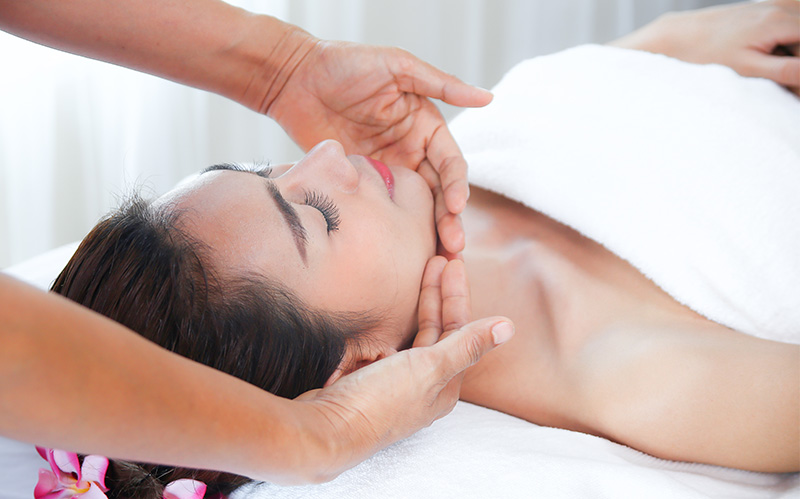
There is no single treatment we use for every case of enlarged pores. At CLEO Aesthetic, our doctors first assess several factors, including:
- Where the pores are most visible
- How oily or congested the skin is,
- Whether there is active acne or scarring
- The condition of the surrounding skin.
We will also look at whether the skin appears dehydrated, less firm, or uneven in texture, as these can make pores look more prominent even when congestion is not the main issue.
This helps us distinguish whether the priority is to reduce sebaceous activity, clear congestion, improve scar-related texture, or support hydration and dermal quality. From there, we will determine a customised treatment plan that will help address the underlying cause of your large pores.
When Surface Congestion Is the Main Issue
If blackheads, excess oil, and surface debris are making your pores look more enlarged, a HydraFacial may be a more appropriate starting point.
This non-invasive treatment uses a specialised vortex-based device to combine gentle exfoliation, extraction of impurities, and infusion of hydrating serums in a single session. By clearing pore debris and improving surface hydration, it may help the skin look smoother and less congested.
If the pores remain noticeable after congestion has improved, our doctors can then assess whether deeper textural or structural changes are also contributing.
When Oil and Congestion Need to Be Controlled First
If enlarged pores appear alongside persistent oiliness, clogged pores, and recurring acne, our doctors may consider a 1,726 nm Accure laser.
This wavelength is preferentially absorbed by lipids within the sebaceous glands, allowing controlled energy to target sebaceous gland activity. Over time, this may help reduce excess oil production and pore congestion.
In these cases, the priority is usually to bring oiliness and breakouts under better control before focusing on residual texture.
When Pores Are Linked to Scarring or Uneven Texture
Fractional laser treatment may be considered when enlarged pores occur alongside acne scarring or more persistent uneven texture.
At CLEO Aesthetic, this may include:
- Fractional pico laser: Creates microscopic cavitation zones beneath the skin using ultra-short pulses. It may be considered for enlarged pores, milder acne scarring, and uneven texture with less disruption to surrounding skin.
- Fractional CO₂ laser: An ablative treatment that creates controlled micro-columns of resurfacing within the skin. It may be considered when acne scars or textural changes are more pronounced and deeper resurfacing is needed.
Both approaches are intended to stimulate the skin’s repair response and support collagen remodelling, but the intensity and recovery period differ. Our doctors will consider the depth of the textural changes, your skin sensitivity, previous treatment response, and tolerance for downtime before recommending an approach.
When Reduced Skin Quality Makes Your Pores More Noticeable
In some cases, pores become more obvious against skin that is dehydrated, less elastic, or generally less smooth.
5 Point Hyaluronic Acid (HA) skin boosters work by attracting and retaining water within the skin, helping improve hydration and moisture balance. Certain formulations may also support processes involved in maintaining dermal structure and elasticity. When hydration and skin quality improve, the surrounding skin may look smoother and pores may become less prominent. This is different from treating active acne or significant congestion, which would usually need to be addressed first.
Conclusion
The question is not simply what causes large pores, but what is driving your pore visibility. Oil control may help someone with recurrent congestion but do little for established acne scars. Resurfacing may improve texture but will not stop pores from becoming blocked again. Hydration can help the skin look smoother, but it does not address excessive sebaceous activity.
This is where CLEO’s Skin Gym approach becomes useful. We treat skin health as an ongoing discipline, using treatments in a deliberate sequence and adjusting the plan as the skin changes. If enlarged pores continue to concern you despite a consistent skincare routine, a personalised assessment can help determine the underlying cause. From there, your doctor can discuss which steps, if any, may be appropriate for your skin.
Book your first appointment with us today.
Frequently Asked Questions
1. Is it possible to completely shrink my pores?
No. Your natural pore size is influenced partly by genetics and skin structure. However, keeping congestion under control and improving the condition of the surrounding skin can make pores look less noticeable.
2. How can I minimise pore size through skincare?
Focus on preventing congestion rather than trying to “close” the pores. Use a gentle cleanser, avoid over-scrubbing, introduce exfoliating ingredients gradually, keep the skin hydrated, and apply sunscreen daily.
3. Can makeup make enlarged pores look worse?
Yes. Heavy or comedogenic products can contribute to congestion, while matte or powder-heavy formulas may emphasise uneven texture. Choosing non-comedogenic products and removing makeup thoroughly can help reduce this.
 CLEO Aesthetics