
Key Takeaways
- Managing acne-prone skin is less about finding one “perfect” product and more about building a routine that the skin can tolerate consistently.
- At CLEO Aesthetic, we assess factors such as oil production, pore congestion, inflammation, sensitivity, and how well the skin recovers between breakouts before deciding what to prioritise.
- We may introduce in-clinic treatments when skincare alone isn’t addressing the main contributors to acne, with each treatment selected for a specific role within the wider plan.
- CLEO Bare Reset brings together sebum control, pore cleansing, regenerative support, and medical-grade LED therapy in a structured sequence.
- Your home routine remains part of the strategy. Simplifying irritating products, keeping the basics consistent, and using acne actives more deliberately can help make the routine easier to sustain.
Introduction
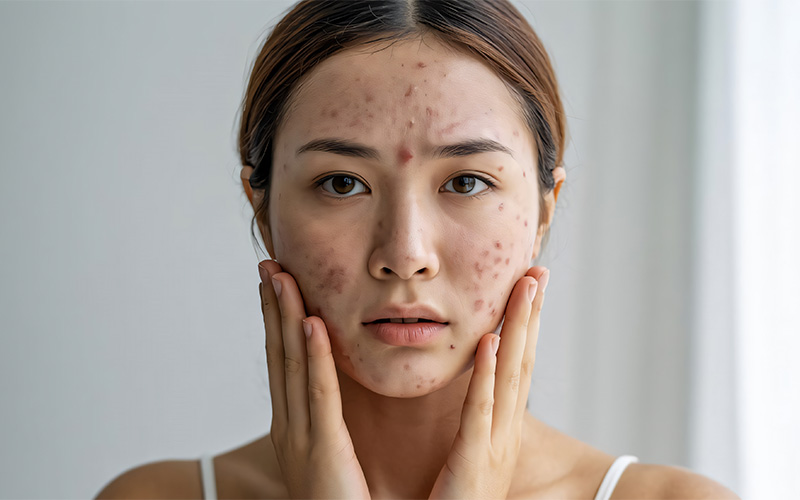
Managing acne-prone skin can be frustrating. Your skin may start improving one day, only to break out again the next. As a result, you may be tempted to switch up your products or add strong actives to your skincare routine.
However, constant changes often make acne harder to tackle. A more useful approach is to look at the wider pattern behind the breakouts, then build a routine that is simple enough to follow consistently. At CLEO Aesthetic, this means assessing the contributing factors before deciding what treatments your skin needs and how your routine should evolve over time.
Step 1: Determine What Causes Your Persistent, Recurring Acne
The first step is understanding why the breakouts are continuing. With acne-prone skin, more than one factor is often involved, so we look at the overall pattern rather than treating each new blemish separately.
During assessment, our doctor considers:
- Oil production: Does the skin become oily quickly, and is excess sebum contributing to repeated breakouts?
- Pore congestion: Are clogged pores, blackheads, or closed comedones a recurring feature?
- Inflammation: Are the breakouts mainly small clogged bumps, or are they becoming red, swollen, and inflamed?
- Skin sensitivity: Is the surrounding skin stinging, flaking, or becoming irritated from strong acne products?
- Recovery between breakouts: Does redness and sensitivity settle, or does the skin remain inflamed even after active lesions improve?
These details help us decide what to prioritise first. Someone with persistent oiliness and congestion may need a different starting point from someone whose skin is already irritated from using several active ingredients.
Step 2: Recommending and Sequencing In-Clinic Treatments for Acne
Depending on what is keeping your acne cycle going, we may recommend a structured acne treatment programme. At CLEO Aesthetic, one option is CLEO Bare Reset, a multi-modality plan designed to address several common causes of acne in sequence.
1. Pore Cleansing and Skin Preparation
We begin with a professional cleansing treatment that removes surface impurities, excess oil, and accumulated debris while helping to loosen pore congestion. This prepares your skin for the subsequent treatment stages and gives us a cleaner treatment surface to work with, particularly when clogged pores and congestion are a recurring part of the acne pattern.
2. CLEO Sebum Control Laser
Next, we use the CLEO Sebum Control Laser, a medical laser treatment designed to target excess sebum production, a key contributor to acne. The treatment uses a 1,726 nm laser wavelength that is selectively absorbed by lipid-rich sebaceous glands in the skin. Through a mechanism known as selective photothermolysis, this allows controlled energy to target sebaceous gland activity, which may help reduce excess oil production, improve pore congestion, and lower inflammatory acne activity over time.
3. Polynucleotide (PN) Skin Boosters
For selected patients, we may incorporate PN skin booster treatments formulated with molecules derived from salmon DNA. This treatment helps support the skin between breakouts, particularly when repeated inflammation has left it feeling more reactive or slower to recover. This can help support barrier recovery and post-inflammatory irritation rather than treating acne directly. It may also help the skin maintain better hydration and resilience while it recovers from repeated flare-ups.
4. Medical-Grade LED Therapy
At the end of the treatment, we may use medical-grade LED therapy as an adjunctive step. In this treatment, our doctors use light-emitting diodes to deliver specific wavelengths into the skin. Blue light, for example, may help target acne-associated bacteria, while green light can help calm inflammation and promote skin circulation. This can support your skin’s recovery after aesthetic treatments and help manage acne-prone skin.
Step 3: Adjust Your Skincare Routine for Acne
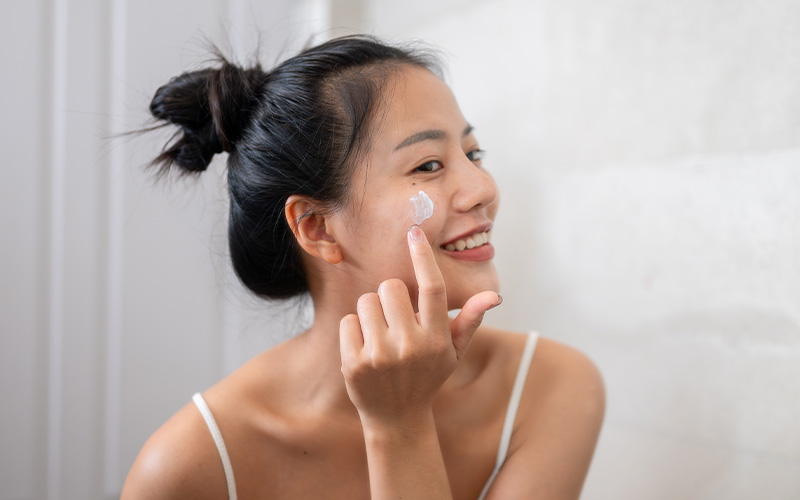
Once we understand the acne pattern, we can suggest changes to your daily routine so that your home care works alongside, rather than against, any in-clinic treatments.
1. Remove Products That Are Adding Unnecessary Irritation
If your skin is already red, flaky, stinging, or unusually sensitive, the first step may be to reduce products that are putting additional stress on the skin. This could mean temporarily cutting back on frequent exfoliation, multiple spot treatments, or overlapping acne actives. The aim is to remove unnecessary irritation so we have a clearer baseline to work from.
2. Build a Reliable Daily Foundation
From there, we focus on the products that should remain consistent regardless of whether you are actively breaking out. This generally includes gentle cleansing, lightweight moisturising, and daily sun protection, with products selected according to how oily, congested, or sensitive the skin currently is. Keeping these basics steady helps support the skin between flare-ups and professional treatments.
3. Use Acne Actives More Strategically
Rather than using every acne-focused ingredient every day, we look at which actives have a clear role and when they should be used. Their frequency may need to change if the skin becomes irritated, or around certain in-clinic procedures when the skin needs more time to recover. Once the skin is stable, you can introduce or gradually increase relevant actives back into your skincare routine.
Conclusion
Learning how to manage acne is rarely about finding one product, one spot treatment, or one clinic session that fixes everything. What matters more is understanding what is allowing the breakouts to keep returning, then addressing those factors in a considered order.
At CLEO Aesthetic, this is where our Skin Gym philosophy comes in. We see skin health much like physical fitness: progress comes from consistency, the right sequence of interventions, and adjustments over time, not isolated treatments. That means combining doctor-led assessment, appropriately sequenced in-clinic treatments, and a skincare routine that evolves with your skin, so each step contributes to a longer-term plan instead of simply reacting to the next flare-up.
If your acne-prone skin keeps cycling between improvement and another breakout, contact CLEO Aesthetic to arrange an assessment today.
Frequently Asked Questions
1. How long should I follow an acne routine before deciding whether it is working?
Acne routines usually need time before changes become clear. Rather than switching products after a few days, we look for changes in oiliness, congestion, inflammation, and irritation over several weeks. If the skin is worsening, becoming very irritated, or developing more severe breakouts, it may be worth reassessing the routine earlier.
2. Should I stop all active ingredients before an acne treatment?
Not necessarily. This depends on the treatment being performed, the products you are using, and how sensitive your skin is at the time. At CLEO Aesthetic, we may advise temporarily reducing or pausing certain actives around some procedures to minimise unnecessary irritation and give the skin enough time to recover.
3. Can lifestyle changes help with persistent acne?
Lifestyle can form part of the wider picture, but acne is rarely caused by one habit alone. Factors such as stress, sleep, hormones, sweating, and product use may influence flare-ups in some people. We therefore look at lifestyle alongside the skin itself, rather than treating it as a replacement for an appropriate skincare or treatment plan.





 CLEO Aesthetics